For the first time, Ryan didn’t have money to buy a softer landing. The church had shut the faucet. My parents’ friends were embarrassed and angry. Donations were reversed. People who’d written checks demanded receipts. My parents’ social world turned cold, not because they’d lied—people forgive lies all the time—but because they’d lied clumsily and gotten caught.
My mother called me two days after Ryan showed up at my door.
Her voice was smaller, stripped of performance. “We’re your parents,” she said quietly. “You didn’t have to do this to us.”
I stared at the wall as I held the phone. “You did it to yourselves,” I said.
She inhaled shakily. “He’s going to treatment,” she whispered. “Real treatment.”
“That’s good,” I said.
There was a pause. “Are you happy?” she asked, and the question was loaded like a trap.
I chose honesty. “I’m calm,” I said. “For the first time in years.”
My mother’s breath hitched, almost like she might cry. Then her voice sharpened, reflexive. “You think you’re better than your own family.”
“I think I’m allowed to live without being emotionally extorted,” I replied.
Silence.
Then my father took the phone. “You’re done with us too?” he asked, voice hard.
I waited a beat. “I’m done being your emergency fund,” I said. “I’m done being the scapegoat. If you want a relationship, it has to be real. No money. No manipulation.”
Dad scoffed. “So you want to punish us.”
“No,” I said. “I want boundaries.”
He made a sound like disgust. “You’ve changed,” he said.
“Yes,” I replied. “I had to.”
I ended the call.
That night, I sat in my living room and realized something strange: the silence in my apartment wasn’t lonely.
It was earned.
Weeks passed. My sleep deepened. My appetite came back. My house felt larger without emergencies echoing through it.
I started therapy. Not because I was broken, but because I wanted language for what had happened. My therapist called it parentification, enabling, scapegoating. I called it my childhood. Naming it didn’t change the past, but it changed how it sat inside my body.
One afternoon, Jenna texted me: Heard through the grapevine the DA might press charges if they can prove solicitation fraud. Don’t respond to anyone without counsel.
I stared at the message, feeling the weight of how far this had gone. I hadn’t wanted to destroy my family. I’d wanted to stop being destroyed by them.
Ryan entered treatment under employer supervision. Real intake. Real drug screens. Real therapists. Not the fake rehab receipts he used to wave at my parents like a magic spell.
I heard about it through my aunt, who left a voicemail that was mostly awkward breathing, then: “He’s actually there. They took his phone. They’re serious this time.”
Good, I thought. Serious was what he needed.
My parents stopped calling for a while. Not because they understood, but because they ran out of leverage. Without a crisis to sell me, they didn’t know how to keep me in the story.
Then, a month later, a letter arrived.
Handwritten. My mother’s handwriting, tight and slanted like she was trying to hold her emotions inside the lines.
Alex,
I don’t know how to talk to you without it becoming a fight. Your father is angry. Ryan is ashamed. I am exhausted. But I keep replaying that night you were little and Ryan broke the window and you cleaned up the glass so no one would step on it. You were always the one who made things safe. I’m sorry we made you carry that. I don’t know what happens now. I just know I miss my child.
I read it twice.
It wasn’t perfect. It didn’t include accountability for the fraud. It didn’t say, We used you. It didn’t say, We let Ryan abuse you.
But it was the first time my mother had written about me like I was a person and not a tool.
I didn’t respond yet.
Not because I wanted to punish her. Because I wanted to be careful with my own healing. Because if I rushed back in, the old patterns would snap into place like magnets.
Part 5
Three months after the scam collapsed, my phone buzzed with a message from a number I hadn’t blocked.
Ryan.
It was only two words.
I’m sorry.
No demand. No threat. No guilt. No story about how hard his life was. Just two words.
I stared at it for a long time. Then I set my phone down and went back to what I was doing—laundry, of all things. Folding towels. Listening to a podcast. Living a life that didn’t require me to rescue anyone.
Justice isn’t loud. It doesn’t announce itself.
It removes oxygen from the lie and waits.
Ryan stayed in treatment. He didn’t graduate with a triumphant speech the way he used to. He didn’t call himself cured. He did the unglamorous work: meetings, accountability, job probation, rebuilding trust with people who didn’t owe him trust.
My parents stumbled through their own version of withdrawal. Without Ryan’s crises, they had to sit with their own emptiness. They tried to fill it with anger at me at first. Then, slowly, with uncomfortable questions: Why did we let it get this far? Why did we believe him over and over? Why did we treat Alex like a bottomless well?
They didn’t call to confess these questions. But my aunt told me, once, “Your mom cried in my kitchen and said she doesn’t know who she is when she’s not rescuing Ryan.”
I understood that more than I wanted to.
A year passed.
On the anniversary of Ryan’s text—the day he’d wished me dead—he asked if we could meet in a public place. He didn’t ask for money. He didn’t ask for forgiveness. He said he wanted to say things out loud.
I agreed to coffee at a place near my apartment, mid-afternoon, bright and crowded enough that no one could perform too dramatically.
Ryan walked in looking different. Not healed, not shiny. Just… present. His eyes didn’t dart as much. His hands didn’t shake the way they used to unless he’d gone too long without eating. He sat across from me and stared at the table like he was afraid to look up.
“I wrote that,” he said finally, voice low. “The text.”
I didn’t respond.
He swallowed. “I meant it in the moment,” he admitted, and his face tightened. “And that’s the sickest part. I wanted you to hurt because you weren’t giving me what I wanted.”
I took a slow sip of coffee. “Yes,” I said.
Ryan flinched like agreement hurt more than anger.
“I’ve been trying to understand why,” he continued. “I’ve been trying to understand why I could do that to my own brother.”
I watched him carefully. “Do you understand?” I asked.
Ryan’s eyes finally lifted to mine. There was shame there. Real shame, not the kind used to get sympathy. “I think… I think I learned it,” he said quietly. “I learned that when I’m in pain, everyone moves. And when you’re in pain, everyone tells you to be strong.”
The sentence landed between us like a truth neither of us had wanted to say out loud.
“I’m not here to fix you,” I said. “I’m not your backup plan. If we have any relationship, it’s not that.”
Ryan nodded quickly. “I know,” he whispered. “That’s why I’m here. To tell you I know.”
He slid a folded piece of paper across the table. Not money. Not a bill. A list.
“I wrote down everything you paid for,” he said. “Everything you did. Not to guilt you. To face it.” His voice cracked. “I’m paying it back. Not all at once. I can’t. But I will. Because… because I have to stop being the person who takes and takes and calls it love.”
I didn’t touch the paper yet. My chest felt tight, but not with rage. With something like grief. The grief of realizing how much time I’d lost to their emergencies.
“Okay,” I said.
Ryan blinked. “Okay?”
“That’s all I have,” I said. “I’m not forgiving you on command. I’m not promising anything. But I can sit here and hear you.”
He nodded, tears in his eyes. “That’s more than I deserve,” he whispered.
“Maybe,” I said. “But I’m not doing this for what you deserve. I’m doing it for what I want. And what I want is peace.”
Ryan wiped his face with the heel of his hand, embarrassed. “Mom and Dad… they’re trying,” he said.
I exhaled. “They can try over there,” I said softly, pointing to the distance. “They don’t get automatic access anymore.”
Ryan nodded. “I get it,” he said. “I didn’t before. I do now.”
When we stood to leave, he didn’t ask for a hug. He didn’t grab my arm. He didn’t try to make it a movie ending.
He just said, “Thank you for not saving me.”
I paused. “I didn’t save you,” I said. “I saved myself.”
Ryan’s mouth trembled, then he nodded once. “Yeah,” he whispered. “That.”
We walked out into the afternoon sun. My phone stayed quiet in my pocket. No frantic calls. No threats. No emergency invoices.
The silence didn’t feel empty.
It felt like space.
Space to eat dinner without bracing for disaster. Space to sleep. Space to be a person instead of a solution.
And if I ended up alone someday, I realized as I drove home, it wouldn’t be because I was pathetic.
It would be because I finally stopped letting cruelty masquerade as family.
And that kind of alone is not a curse.
It’s freedom.
Part 6
The week after the coffee shop, my parents didn’t call.
That silence wasn’t peace. It was recalibration.
In my family, quiet usually meant someone was reorganizing a story. Picking new words. Choosing which facts to ignore. Deciding how to make me the villain without saying it directly.
On Thursday evening, my mother emailed me.
Not a text. Not a call. An email, like she was trying to sound formal, like she could keep emotion contained by using a subject line.
Subject: Can We Talk
The email itself was short.
Alex,
Your father and I would like to meet. Not to ask for money. Not to argue. We need to talk about what happened. We need to talk about Ryan. We need to talk about us. Please.
No apology. Not yet. But the phrase not to ask for money was new.
I stared at the screen for a long time, then opened a blank note and wrote what I knew was true:
If I meet them, I do it on my terms.
I replied with three sentences.
Saturday, 2 p.m., at the café on Maple and 8th.
One hour.
If anyone raises money requests or tries to guilt me, I’m leaving.
They answered within five minutes.
Agreed.
That Saturday, I arrived early and chose a table near the window, in full view of the street. Public enough to keep everyone polite. Bright enough to make it harder to perform.
My parents walked in together, and for the first time in a long time, they didn’t look like a unified front. They looked like two people who had been arguing in private and were tired of pretending.
My mother sat down first. She kept her purse in her lap like a shield. My father sat slower, as if the chair was heavier than it used to be.
Mom’s eyes moved over my face like she was looking for bruises she couldn’t see. “You look… rested,” she said.
“I am,” I replied.
Dad cleared his throat. “Ryan told us you met him.”
“Yes,” I said.
My mother’s mouth tightened. “He said you didn’t give him money.”
“No,” I said simply.
Silence stretched. My father stared at the table. My mother stared at my hands, as if she expected to see the old version of me—nervous, eager to fix.
“Alex,” she began, and her voice wavered. “I don’t know how we got here.”
I didn’t soften. “We got here one lie at a time,” I said.
Dad flinched. My mother’s eyes filled. “We were scared,” she whispered.
“You’ve been scared for years,” I said. “Fear isn’t an excuse for using me.”
My mother inhaled sharply. “We didn’t use you,” she protested, instinctive.
I waited, letting the sentence hang.
Dad finally spoke. His voice was rough. “We did,” he said quietly.
My mother turned to him, shocked, like he’d betrayed the family script.
Dad kept going. “We treated you like… like the one who could handle it,” he said. “And when Ryan messed up, we treated it like your job to fix the impact.”
My mother’s lips trembled. “He’s our son,” she whispered.
“And I’m your son too,” I said. Not loud. Not angry. Just fact. “But you only ever asked one of us to be responsible.”
My mother swallowed hard. She looked down, then said, very quietly, “I didn’t realize.”
I didn’t laugh. “You realized when it was convenient not to,” I said.
Her eyes flashed with pain. “That’s not fair,” she whispered.
“It’s accurate,” I said.
The waitress came by, and my mother ordered tea with shaking hands. Dad ordered black coffee. I didn’t order anything. I didn’t want to owe the table even a small comfort.
My father leaned forward, elbows on the table. “The church finance committee called us in,” he admitted. “They… they weren’t kind.”
Good, I thought. Kindness had been the fuel for this mess.
“They froze our account,” Mom said, voice thin. “They asked us to explain the paperwork. The screenshots. The… the fact that Ryan was posting from a bar.”
Her cheeks flushed. Shame, finally. Not for what they did to me. For getting caught.
I watched her carefully. “And what did you tell them?”
My mother’s eyes darted away. “We said Ryan was confused,” she whispered.
I exhaled slowly. “You blamed him.”
Dad’s jaw clenched. “Because blaming ourselves felt…” He stopped, struggling.
“Impossible,” I finished.
Dad nodded. “Yes.”
My mother’s tea arrived. She wrapped both hands around the cup like she was cold. “They said we have to pay back donations,” she said. “Every cent.”
“You should,” I replied.
She flinched. “We don’t have it,” she whispered.
I didn’t take the bait. “That’s not my problem,” I said.
My father’s shoulders slumped, not in anger but in defeat. “We’re figuring it out,” he said. “We’re selling the boat. We canceled the vacation. We… we’re paying it back.”
My mother stared at me with wet eyes. “We didn’t want to hurt you,” she said.
“That’s not what matters,” I said. “What matters is that you did.”
Silence again. The café buzzed with other people’s lives. Cups clinked. A baby laughed. Somewhere nearby, someone ordered a muffin like the world was simple.
My mother’s voice broke. “When you hung up that night,” she whispered, “I thought you were punishing us.”
“I was protecting myself,” I said.
Dad nodded slowly. “I see that now,” he said. He looked older than I remembered, like denial had been a kind of youth and it finally wore off.
My mother’s hands trembled around her tea. “Ryan is… different,” she said. “He’s not calling us for money. He’s not screaming. He’s quiet.”
“He’s sober,” I said.
She nodded quickly. “He’s doing meetings,” she said. “He talks about responsibility like it’s… new.”
“It is new,” I said. “For him.”
My father stared at me with a careful expression. “Do you hate us?” he asked.
The question was raw enough that it almost felt honest.
I considered it.
“I don’t know if hate is the right word,” I said finally. “I feel grief. I feel anger. I feel… emptiness sometimes, because I don’t know who I am in this family if I’m not the solution.”
My mother’s face crumpled. “You’re our son,” she whispered.
“That wasn’t enough before,” I said.
My father’s voice cracked. “Tell us what to do,” he said.
I held his gaze. “Stop asking me to fix Ryan,” I said. “Stop asking me to rescue you from the consequences of enabling him. And if you want to have a relationship with me, it can’t be built on guilt.”
My mother nodded too quickly, like she’d agree to anything if it meant I wouldn’t leave. “Okay,” she whispered.
I raised a finger slightly. “And one more thing,” I said. “If you ever lie to get money again—about Ryan, about anyone—I’m done. Permanently.”
My mother went pale.
Dad nodded once. “Understood,” he said.
I stood up at exactly one hour. Not dramatically. Just because I said I would.
My mother’s voice caught as I gathered my jacket. “Can we… can we see you again?” she asked.
I paused. “Maybe,” I said. “If this stays real.”
As I walked out, my phone buzzed.
Ryan.
He didn’t ask for money. He didn’t ask to meet. He sent a photo.
A ledger page, handwritten, with numbers and dates. A list of things I’d paid for, and beside each line, a tiny note: owed.
Under it, one sentence:
I’m paying it back. Even if it takes years.
I stared at it until the screen dimmed.
Then I typed back one word.
Not forgiveness.
Not love.
Not an invitation.
Just acknowledgement.
Okay.
Part 7
Real emergencies don’t come with scripts.
That’s how I knew something was different when my mother called six months later.
It was a Tuesday morning. I was in the middle of a work meeting, laptop open, notes scattered, when my phone kept buzzing in my pocket. I ignored the first call. Then the second. Then the third.
When the meeting ended, I stepped into the hallway and looked at the missed calls.
Mom. Dad. Mom. Dad.
My chest tightened, a reflex my body still had: the old panic of being pulled back into the role.
But when I answered, my mother’s voice wasn’t theatrical.
It was small. Terrified. Real.
“Alex,” she whispered. “Ryan collapsed.”
My heart lurched. “Where?” I asked, automatically.
“At his job,” she said. “They called an ambulance. He’s at Mercy General. They said… they said overdose.”
There it was. The word. Heavy, ugly, honest.
I braced myself for the next line.
Send money. Pay now. Save him.
It didn’t come.
My mother swallowed hard. “We’re at the hospital,” she said. “They stabilized him. He’s breathing. But… Alex, I’m scared.”
I stared at the wall, my mind snapping into a cold clarity.
“Did you call 911?” I asked.
“Yes,” she said quickly. “Yes. The paramedics… they did Narcan. They—”
“Good,” I said.
There was a pause, like she didn’t expect approval. “Can you come?” she asked quietly.
I could have said no. I could have protected my peace by staying away. I had every right.
But boundaries didn’t mean absence. They meant choice.
“I’ll come,” I said. “But I’m not paying. And I’m not signing anything.”
My mother’s breath hitched, not in anger. In relief. “Okay,” she whispered. “Okay.”
At the hospital, the fluorescent lights hummed. The smell of antiseptic hit me like memory. My parents sat in stiff chairs in the waiting area, my mother’s eyes red, my father’s hands clasped so tightly his knuckles were white.
When they saw me, my mother stood like she might run into my arms. Then she stopped herself, as if she finally understood I wasn’t a comfort object. She took a step closer anyway and whispered, “Thank you for coming.”
I nodded. “Where is he?” I asked.
Dad’s voice was rough. “ICU,” he said. “They said he might wake up soon.”
My mother pressed a hand to her mouth. “He relapsed,” she whispered. “He’s been clean, and then—” She shook her head, broken. “He didn’t call us for money. He didn’t ask. He just… did it.”
I sat down slowly. My body felt oddly calm, like my nervous system had finally learned the difference between crisis and manipulation.
A doctor came out, introduced himself, and explained the basics. Ryan had survived. They’d caught it in time. But he’d need monitoring, and he’d need a plan.
Then the doctor asked the question that changed the air.
“Who is his medical decision-maker?” he asked.
My father started to speak, then hesitated. My mother looked at him. They both looked at me for a split second, the old pattern twitching: give it to Alex.
I held my hands up gently. “Not me,” I said. “I’m here as family support. I’m not taking responsibility for his medical decisions.”
My mother nodded quickly, eyes wet. “We are,” she said. “His father and I.”
The doctor nodded. “All right,” he said.
A small moment. A huge shift.
| « Prev | Next » |
News
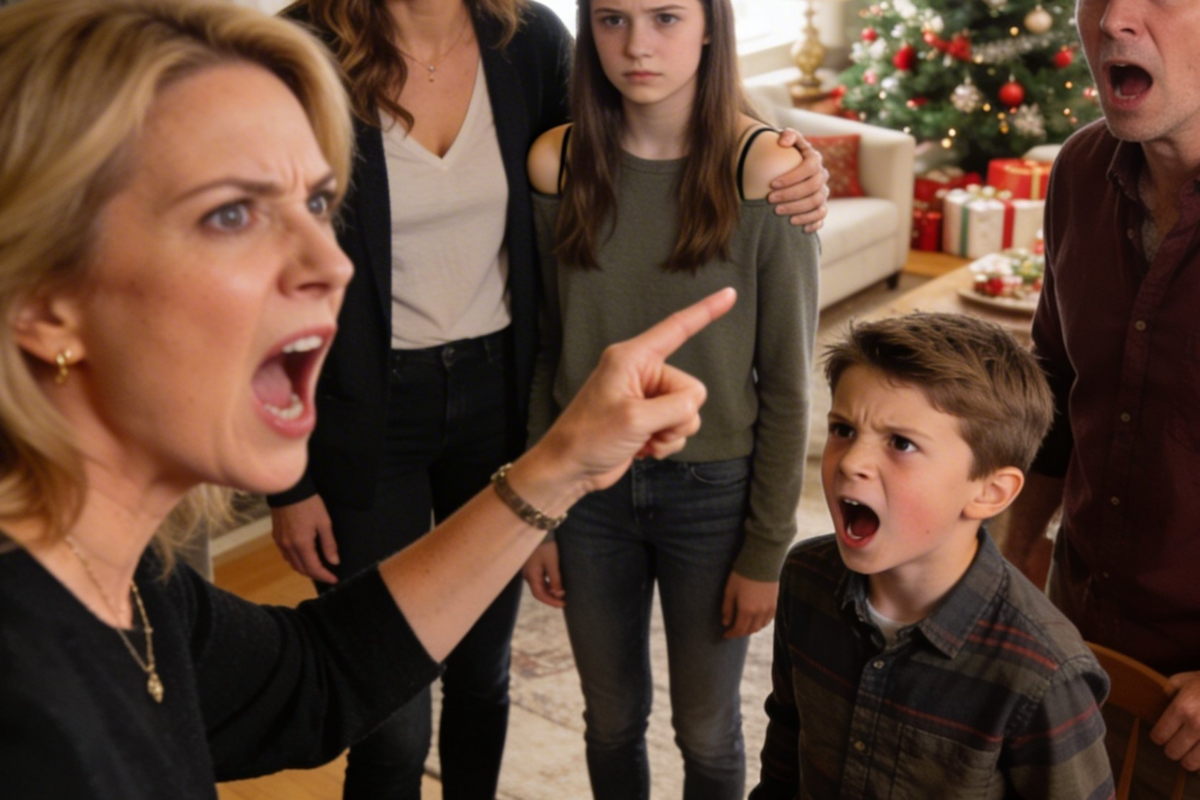
“YOUR HUSBAND’S KID HAS NO RIGHT CALLING US GRANDMA,” My Mom Said To My 14-Year-Old Stepdaughter On Christmas
“YOUR HUSBAND’S KID HAS NO RIGHT CALLING US GRANDMA,” My Mom Said To My 14-Year-Old Stepdaughter On Christmas -In Front Of Everyone. Then My 8-Year-Old Son Stood Up And Said…
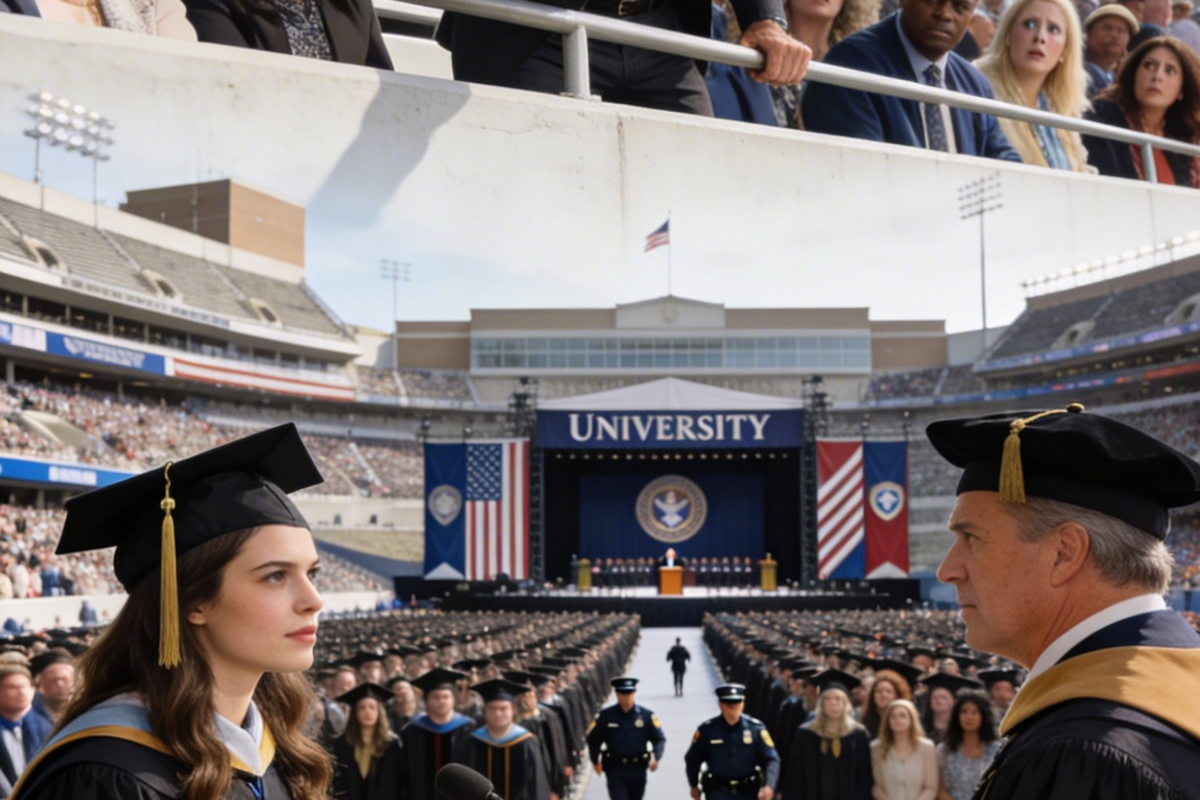
At My Graduation, My Father Took Credit For My Degree—Seven Words Sent Security To His Seat
At My Graduation, My Dad Stood Up In The Bleachers And Yelled: “DON’T CLAP-I PAID FOR THAT DEGREE, NOT HER.” 2,000 People Stared. My Hands Shook But I Smiled, Stepped…

During Dinner, Mom Compared Me To My Sister-Again.
During Dinner, Mom Compared Me To My Sister-Again. “She’s The One We’re Proud Of.” I Quietly Helped With Dishes And Said Goodbye. The Next Day, I Got A Message: “Mom’s…

I Woke Up From A Coma To An Empty Room.
I Woke Up From A Coma To An Empty Room. No Dad, No Siblings. Just A Note From My Father “We Stopped Paying. Good Luck.” I Cried For An Hour….

I Went To The Hospital To Take Care Of My Son Who Had A Broken Bone
I Went To The Hospital To Take Care Of My Son Who Had A Broken Bone. While He Was Sleeping, The Head Nurse Quietly Slipped A Piece Of Paper Into…
At 15, My Parents Left Me In A Storm Over My Sister’s Lie—Dad’s Hands Shook When He Saw Who Saved Me
At 15, My Parents Believed My Sister’s Lie And Kicked Me Out In A Storm. “GET OUT. I DON’T NEED A SICK DAUGHTER.” 3 Hours Later -Police Called Them To…
End of content
No more pages to load