When Ryan woke later that evening, he looked like someone who’d been dragged back from the edge and couldn’t believe the ground was solid. His eyes were glassy. His skin pale. He turned his head slowly and saw me.
Shame moved across his face like a shadow.
“You came,” he whispered.
“I came,” I said.
He swallowed. “I’m sorry,” he said, voice cracking. “I’m so—” He squeezed his eyes shut. “I messed up.”
My mother stepped forward, crying. My father placed a hand on Ryan’s shoulder, the way he should have done years ago without making it my job to fix everything.
Ryan’s gaze flicked back to me. “Are you… are you going to hate me again?” he whispered.
I stared at him for a long moment. “I’m not doing ‘again,’” I said quietly. “I’m not cycling through the same thing. If you want a relationship with me, it’s sober. It’s honest. It’s slow.”
Ryan nodded, tears slipping out. “Okay,” he whispered.
That night, I left the hospital and drove home alone. The city lights looked blurred through my windshield because my eyes were tired. When I got home, I sat in my kitchen and realized something startling.
I didn’t feel responsible.
I felt sad. I felt angry. I felt grief.
But I didn’t feel obligated to sacrifice myself to keep him alive.
That obligation had been the chain.
And the chain was broken.
Part 8
Two years later, the story didn’t end in a perfect reunion.
It ended in something rarer.
A new pattern.
Ryan stayed sober after the overdose. Not because fear scared him straight for a week. Because he finally ran out of ways to fake accountability. He didn’t get rescued into comfort. He got rescued into truth: meetings, supervision, probation at work, a sponsor who didn’t care about excuses, parents who stopped using me as the pressure valve.
He paid back the church donations first. He set up a repayment plan and stuck to it. When he mailed the first check, he sent me a photo of the receipt and didn’t add a single emotional sentence to manipulate me. He just wrote: first payment.
My parents changed slower.
They joined a family support group. Not the kind where people sit around and trade stories about how hard it is to love an addict like they’re collecting sympathy points. The kind where people get told uncomfortable truths.
My mother stopped saying, he’s sick like it erased accountability. She started saying, we enabled him, and we hurt you.
My father started apologizing without adding but at the end.
One Sunday afternoon, he asked if he could come by alone. No Mom. No Ryan. Just him.
He sat in my living room and looked at the framed photo on my shelf of me and my friends on a hiking trip. Chosen family. People who didn’t ask me to bleed to prove love.
“I thought being a good father meant keeping the peace,” he said quietly.
I didn’t answer.
He swallowed. “What I did was outsource the hard parts to you,” he continued. “I let you be the adult while I pretended things weren’t falling apart.”
My throat tightened. “Yes,” I said.
Dad nodded slowly, eyes wet. “I’m sorry,” he whispered. “Not because you stopped paying. Because you had to stop to survive.”
I stared at him for a long time. Then I said the sentence that used to feel impossible.
“I accept your apology,” I said. “I don’t erase what happened. But I accept it.”
He exhaled like he’d been holding his breath for years.
Ryan and I didn’t become best friends. We didn’t hug in slow motion and heal instantly.
We became something more realistic: two adults who learned how to exist in the same world without one consuming the other.
Sometimes we met for coffee. Sometimes we went months without speaking. When he texted, it wasn’t to demand. It was to update. To own. To ask, carefully, if I was open to something.
And sometimes I said no.
And the world didn’t end.
On the third anniversary of his cruel text, my phone buzzed.
Ryan.
He didn’t write I’m sorry this time. He didn’t write a dramatic paragraph.
He wrote:
I read what I sent you again today. I still can’t believe I was that person. I’m trying to be someone you don’t have to fear.
I stared at the words, and my chest did something strange.
It loosened.
I didn’t reply with forgiveness. Not because I was holding it hostage, but because forgiveness wasn’t the point anymore. Safety was.
So I replied with the only thing that mattered.
Keep trying.
That night, I sat on my couch in the quiet. No frantic calls. No emergency invoices. No guilt campaigns. My phone was just a phone, not a leash.
I thought back to the moment I’d hung up on my parents and rolled over to sleep.
People love to call that cold.
But it wasn’t cold.
It was the moment I stopped feeding a fire that would have burned my whole life down.
And if one day I did end up alone, I knew something I hadn’t known when I was younger:
Loneliness isn’t the worst ending.
Being owned is.
The silence in my home wasn’t empty.
It was earned.
Part 9
The envelope looked official before I even tore it open.
Thick paper. A return address with a county seal. My name printed in block letters like it belonged to someone with a different life—someone who did normal adult things like vote and pay taxes and occasionally get summoned into other people’s consequences.
I stood in my entryway with my keys still in my hand and read the first line.
SUBPOENA TO TESTIFY
My stomach didn’t drop the way it would have two years earlier. It tightened, yes—but more like a seatbelt clicking into place than a freefall.
The case number meant nothing to me. The words underneath did.
People v. Carter. Fraudulent solicitation. Forgery. Use of medical institution branding.
Carter was my family name.
I read it again, slower.
This wasn’t a private mess anymore. It wasn’t a family emergency. It wasn’t a guilt campaign with a donation link.
This was the world, finally, answering back.
My phone buzzed before I even moved from the doorway.
Mom.
I let it ring.
Then Dad.
Then Mom again.
I watched the screen light up like it was trying to drag me back into the old role: translator, buffer, fixer, sponge.
When it stopped, I walked to my kitchen, set the subpoena on the table, and poured myself a glass of water. My hands didn’t shake. That was new too.
A minute later, a text appeared.
Mom: We got something in the mail. Call us NOW.
I stared at the message, and something almost like pity flickered through me. Of course they’d gotten it too. Of course the system didn’t just tap me on the shoulder and whisper, Hey, Alex, can you handle this like you always do?
The system didn’t care who was “strong.” It cared who did what.
I typed back:
I got one too. I’m not discussing this by phone.
Three dots appeared immediately. Then disappeared. Then appeared again.
Mom: Alex please. This is serious.
I didn’t answer. I wasn’t being cruel. I was being literal. Serious meant I needed clarity, not a performance.
I called Jenna.
She picked up and exhaled like she’d been waiting for this call since the day I emailed Saint Jude’s legal department.
“They’re moving forward?” she asked.
“I got subpoenaed,” I said. “Looks like charges.”
“Okay,” she said, the way you say okay when the world is doing what it’s supposed to do and it still feels unreal. “Do not talk to your parents about it. Do not try to coordinate stories. And if they pressure you, document that too.”
“I’m not trying to be… dramatic,” I said, rubbing my forehead.
“This isn’t drama,” Jenna replied. “This is process.”
Process. Systems. Paperwork.
The language of the only thing my family couldn’t charm.
That night, my father showed up at my door.
He didn’t knock the way Ryan used to—angry, entitled. He knocked like someone who hoped the door might open out of habit.
I looked through the peephole.
Dad stood alone. No Mom. No Ryan. His shoulders were stiff, like he’d rehearsed his posture. In his hand was an envelope identical to mine.
I didn’t open the door. I spoke through it.
“What do you need?” I asked.
A pause. Then his voice, muffled by wood. “We need to talk.”
“Not here,” I said. “Not like this.”
“Alex,” he said, and there it was—the tone that used to mean you don’t get to say no. “This is going to ruin your brother’s life.”
I closed my eyes for a second, letting the old reflex burn itself out.
“Dad,” I said, calm, “the fraud already happened. The consequences are just catching up.”
He exhaled hard. “He’s trying now,” he insisted. “He’s sober. He’s working. He’s paying things back.”
“I know,” I said. “And this is still real.”
Silence.
Then, softer, like he was trying a different key in a lock. “Your mother is terrified.”
I didn’t bite. “I’m not your panic sponge,” I said.
He swallowed. “They want you to… help,” he said.
“There it is,” I replied.
Dad’s voice sharpened. “Not money,” he snapped quickly, like he knew that word would make me disappear. “Not that. Just—just… you know how to talk to people. You know how to make things sound… better.”
Translation: Make us look less guilty. Make this smaller. Make this go away.
“I’m not doing that,” I said.
His anger flared. “So you’ll just let them paint us as criminals?”
“You don’t need paint,” I replied, and the sentence came out colder than I intended. I softened the tone, not the boundary. “Dad. I’m not going to lie. I’m not going to minimize. I’m not going to rescue you from what you chose.”
On the other side of the door, his breathing changed. I heard something in it I hadn’t heard before: fear without a target.
“Your mother thinks you hate us,” he said quietly.
I leaned my forehead against the door. “I don’t hate you,” I said. “But I’m not going to protect you at the cost of the truth.”
When he spoke again, his voice was smaller. “What are you going to do?”
“I’m going to comply,” I said. “I’m going to tell the truth when asked. And I’m going to go back to my life.”
He was quiet for a long time.
Then, almost a whisper: “You really did leave.”
I opened my eyes, staring at the wood grain like it was a map. “No,” I said. “I stopped disappearing.”
I heard his feet shift. He didn’t argue again. He didn’t threaten. He didn’t plead.
He walked away.
Two weeks later, I sat in a bland county building under fluorescent lights that made everyone look slightly guilty just by existing.
A prosecutor with a tight ponytail and kind eyes asked me to confirm my name, my relationship, and whether I recognized the forged document.
I did.
She slid my screenshots across the table like playing cards: Ryan’s text, my parents’ calls, the fake letterhead, the Instagram bar story with the timestamp.
“Did anyone instruct you to send money?” she asked.
“Yes,” I said. “My mother and father did.”
“Did they claim medical treatment would be withheld without it?”
“Yes.”
“Did they represent that your brother was hospitalized and in critical condition?”
“Yes.”
I answered in clean sentences, no embellishment. No rage. No dramatic monologue.
Just a record.
When I left, my legs felt heavy—not from guilt, but from the strange grief of watching a story become official.
Outside, I sat in my car for a few minutes and stared at the steering wheel.
Two years ago, I would’ve been shaking. I would’ve been spiraling. I would’ve been writing mental scripts to save everyone from their own choices, as if my job on earth was to keep my family from touching consequences.
Now I just felt… tired.
But it was a good tired. The tired you feel after finishing something hard you didn’t create but had to carry anyway.
That evening, Ryan texted me.
Ryan: I heard you got subpoenaed too.
I stared at his name and felt the old instinct to brace for impact.
Then another message.
Ryan: I’m not asking you to lie. Don’t. I’m taking what I did.
I read it three times.
No manipulation. No “but.” No blame.
Just ownership.
I typed back:
Okay.
A minute passed.
Ryan: If you don’t want to see me at court, I get it. But… thank you for not letting us keep doing it.
My throat tightened. Not with forgiveness—still not that—but with something like reality settling into place.
Me: I’ll be there. I’m not rescuing you. I’m witnessing.
The court date came in late fall, gray sky, wind that made the flags outside the courthouse snap like they were impatient.
Inside, everything smelled like paper and old coffee.
My parents sat together in the second row. Ryan sat behind them, alone. There was space between them that hadn’t existed in my childhood—the physical manifestation of a new truth: they couldn’t merge into a single story anymore.
When Ryan saw me, he didn’t wave. He didn’t smile. He just nodded, small. Acknowledgement without entitlement.
My mother turned and noticed me. Her eyes widened like she hadn’t believed I’d show.
I didn’t sit with them.
I sat three rows back, alone, where I could leave if I needed to. Where I could be a person, not a pawn.
When the judge called the case, my mother started crying immediately—quiet, controlled, practiced. But the sound didn’t move the room the way it used to move our house.
The judge didn’t soften.
The prosecutor spoke in precise language about misuse of medical branding, fraudulent solicitation, and the amount of money requested.
Fifteen thousand. My body remembered the number like a bruise.
Ryan’s attorney spoke about his sobriety, his treatment history, his repayment plan, his willingness to accept responsibility.
Then Ryan stood.
“I did it,” he said, voice steady enough to surprise me. “I lied. I forged it. I asked them to call. I told them what to say. I was desperate and I was selfish and I thought my brother would cave like he always had.”
He swallowed, eyes flicking toward my parents.
“They didn’t stop me,” he said. “They helped. But it started with me.”
My mother made a sound like she’d been punched. My father stared at the floor.
And for the first time, the story belonged to the person who did it.
The judge issued a plea agreement: restitution, mandatory continued treatment, community service, probation. My parents received a deferred program contingent on repayment and a fraud-prevention class, plus a requirement to attend a family support group with documented participation.
No cinematic justice. No handcuffs in slow motion.
Just consequences with paperwork.
When it was over, everyone stood and shuffled out like it was any other day.
Outside the courthouse, my mother rushed toward me.
“Alex,” she said, breathless, face blotchy from crying. “Please. Please. You didn’t have to say—”
“I said what happened,” I replied.
Her eyes filled. “We’re not bad people,” she whispered, like she needed me to hand her that identity back.
I looked at her for a long moment.
“I’m not the person who assigns you that anymore,” I said quietly. “You decide who you are by what you do next.”
My father approached slower. His voice was hoarse. “We’re paying it back,” he said. “All of it.”
“I know,” I replied.
My mother reached for my hand. I stepped back gently, not harsh, just clear.
Ryan came out last. He looked exhausted, like carrying the truth took more energy than lying ever did.
He stopped a few feet away, not too close.
“I’m sorry,” he said again. “I know it doesn’t fix anything.”
“It doesn’t,” I replied. “But it matters that you know that.”
He nodded, eyes bright. “I’m going to keep doing the work,” he said.
“Good,” I said.
Then I walked to my car alone and drove home with the radio off, letting silence fill the space where chaos used to live.
That night, I opened my notes app and wrote one sentence:
They can have consequences without having me.
I stared at it until my eyes burned.
Then I slept.
Part 10
The first holiday after court, I didn’t go home.
Not as punishment. As practice.
I stayed in my apartment, made a small dinner, and went on a long walk through my neighborhood while other people drove past with casseroles and wrapped gifts and the old belief that proximity equals love.
In the past, being alone on a holiday would’ve felt like failure.
This time it felt like a choice.
My mother texted that afternoon.
Mom: We miss you. We understand if you’re not ready.
No guilt. No “after everything we’ve done for you.” No passive-aggressive Bible verse.
I stared at the message for a long time, waiting for the hook.
It didn’t come.
So I replied:
I’m not ready. But I appreciate you respecting it.
A minute later:
Mom: Okay. We love you.
I didn’t answer that one. Not because it wasn’t true, but because I was still learning what love was supposed to feel like when it wasn’t attached to a bill.
Spring came. The trees outside my building turned green like nothing had ever been broken.
Ryan kept paying restitution. Not quickly, not dramatically—just consistently. Every month I’d get a photo of a receipt and a short message: payment sent. No emotional paragraph. No fishing for praise.
My parents went to their support group. I knew because my aunt—my accidental family historian—would casually mention, “Your mom said something smart at group,” like it was a weather report.
Therapy helped me in a way I hadn’t expected.
I used to think healing meant feeling warm toward people who hurt you.
My therapist taught me something quieter: healing meant not rearranging yourself when they entered the room.
In late summer, I started dating someone named Mira.
She was the kind of person who asked direct questions without making them sharp.
“What’s your family like?” she asked on our third date, as we sat on a park bench sharing fries from a paper tray.
I watched a kid chase a dog across the grass. I felt my chest tighten, then loosen.
“Complicated,” I said.
She didn’t push. She waited.
So I told her the simplified version. Not every detail. Not the courtroom language. Just the shape of it: an older brother who consumed, parents who enabled, me who tried to earn safety by being useful.
Mira listened, quiet and steady.
When I finished, she asked, “What do you want now?”
No one had ever asked me that without attaching it to someone else’s needs.
“I want peace,” I said.
She nodded once, like it was a valid desire. “Then we protect that,” she replied.
We.
The word landed softly, not like a trap.
On the fourth anniversary of Ryan’s cruel text, I didn’t check the date until noon.
That was how I knew I’d changed.
The memory still existed, but it didn’t run my day like an app in the background draining my battery.
At 12:07 p.m., my phone buzzed.
Ryan.
Ryan: Four years ago today I sent you that text. I’m not asking you to respond. I just want it on record: I remember. And I’m sorry. Still.
I stared at it, and I felt something surprising.
Not anger.
Not a rush of forgiveness.
Just… recognition.
He wasn’t trying to erase it. He wasn’t trying to turn it into a redemption story starring himself.
He was letting it be what it was: a marker of who he’d been.
And maybe, quietly, of who he wasn’t anymore.
I typed back:
I remember too. Keep doing the work.
That evening, Mira came over with groceries and kissed me hello like my home was a normal place for love to exist.
| « Prev | Next » |
News
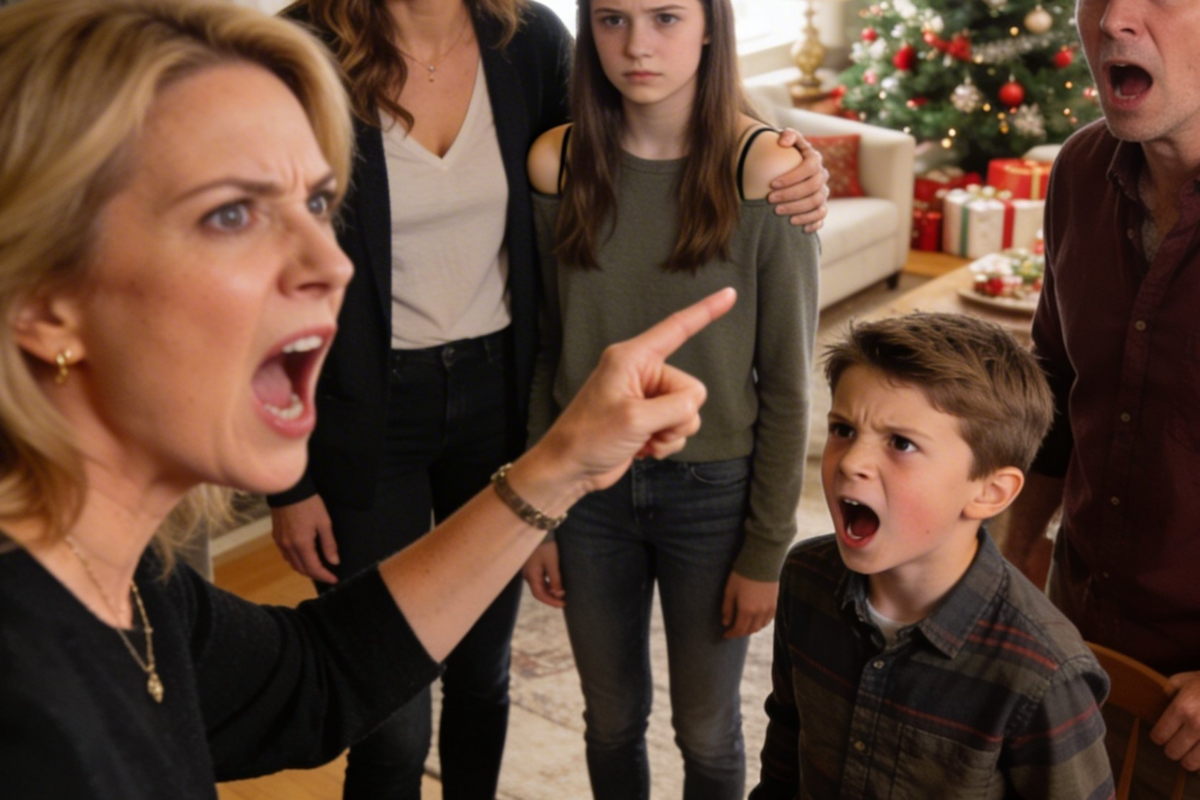
“YOUR HUSBAND’S KID HAS NO RIGHT CALLING US GRANDMA,” My Mom Said To My 14-Year-Old Stepdaughter On Christmas
“YOUR HUSBAND’S KID HAS NO RIGHT CALLING US GRANDMA,” My Mom Said To My 14-Year-Old Stepdaughter On Christmas -In Front Of Everyone. Then My 8-Year-Old Son Stood Up And Said…
At My Graduation, My Father Took Credit For My Degree—Seven Words Sent Security To His Seat
At My Graduation, My Dad Stood Up In The Bleachers And Yelled: “DON’T CLAP-I PAID FOR THAT DEGREE, NOT HER.” 2,000 People Stared. My Hands Shook But I Smiled, Stepped…
During Dinner, Mom Compared Me To My Sister-Again.
During Dinner, Mom Compared Me To My Sister-Again. “She’s The One We’re Proud Of.” I Quietly Helped With Dishes And Said Goodbye. The Next Day, I Got A Message: “Mom’s…

I Woke Up From A Coma To An Empty Room.
I Woke Up From A Coma To An Empty Room. No Dad, No Siblings. Just A Note From My Father “We Stopped Paying. Good Luck.” I Cried For An Hour….

I Went To The Hospital To Take Care Of My Son Who Had A Broken Bone
I Went To The Hospital To Take Care Of My Son Who Had A Broken Bone. While He Was Sleeping, The Head Nurse Quietly Slipped A Piece Of Paper Into…
At 15, My Parents Left Me In A Storm Over My Sister’s Lie—Dad’s Hands Shook When He Saw Who Saved Me
At 15, My Parents Believed My Sister’s Lie And Kicked Me Out In A Storm. “GET OUT. I DON’T NEED A SICK DAUGHTER.” 3 Hours Later -Police Called Them To…
End of content
No more pages to load