While she chopped vegetables, she glanced at my phone on the counter.
“You okay?” she asked.
“Yeah,” I said, surprised to realize I meant it. “Just… noticing.”
“Noticing what?”
“That I’m not bracing,” I said.
She smiled gently. “Good,” she replied. “You deserve a nervous system that gets to rest.”
In October, my mother emailed me again.
Subject: Thanksgiving
I laughed when I saw it, a short sound that startled me.
It wasn’t the invitation itself. It was the fact that she asked.
The email was careful, almost clinical.
Alex,
We will be having Thanksgiving at the house. Ryan will be there. We will not discuss money. We will not ask you to fix anything. We would like to see you, but we understand if the answer is no. If you consider coming, please tell us what you need in order to feel safe.
I stared at the screen for a long time.
That last sentence did something to me.
Not because it made everything okay. But because it proved they were learning a language my family never used: your needs matter.
I showed Mira.
She read it and looked up. “What do you want?” she asked again.
I thought about my apartment, my peace, my earned quiet.
I thought about the courthouse, the way my mother’s tears hadn’t moved the judge.
I thought about Ryan’s steady payments, the way he didn’t demand intimacy as a reward for being less awful.
“I want… to try,” I said slowly. “With conditions.”
Mira nodded. “Name them.”
So I did.
I emailed my mother back:
One: I will stay at a hotel and drive separately.
Two: If anyone raises voices, guilts, or rewrites history, I leave.
Three: I’m bringing someone with me. I won’t be alone in that house.
Four: No alcohol.
I hit send before I could overthink it.
My mother replied within an hour.
Agreed. All of it.
Thanksgiving morning, I stood in a hotel bathroom tying my shoes while Mira brushed her hair behind me and hummed softly like this was just another day.
My hands were steady.
When we pulled into my parents’ driveway, my throat tightened anyway. Trauma doesn’t vanish because people start behaving better. It just gets quieter.
The front door opened before we knocked.
My mother stood there, looking older than I remembered and less armored.
She didn’t lunge for a hug.
She smiled, small. “Hi,” she said. “Mira, thank you for coming.”
Mira shook her hand. “Thank you for having me,” she replied, calm as a lake.
My father appeared behind my mother. He looked at me like he was afraid his eyes might make demands without his permission.
“Alex,” he said, and then, like he’d practiced it: “I’m glad you’re here.”
Inside, the house smelled like turkey and cinnamon and ghosts.
Ryan was in the living room. He stood when he saw me, then stopped, like he remembered the rules of this new world.
He didn’t rush. He didn’t perform.
He just said, “Hi.”
“Hi,” I replied.
That was it.
No dramatic reconciliation. No confetti.
Just two people acknowledging each other without consumption.
Dinner was… normal.
Uncomfortably normal at first, like wearing shoes that used to pinch.
My mother talked about the support group and what she was learning without making herself the hero. My father asked Mira about her work and actually listened to the answer. Ryan talked about his job and his sponsor and his meetings like they were facts, not trophies.
No one asked me to be strong.
No one asked me to fix anything.
Halfway through the meal, my father cleared his throat.
“I want to say something,” he began, and my spine instinctively tightened.
He looked at me, then at Mira, then back to me.
“I’m not asking for forgiveness,” he said. “I’m saying this out loud because I should’ve said it years ago. Alex, we failed you. We used you as a shield against the truth. And I’m sorry.”
My mother’s eyes filled. She didn’t contradict him. She didn’t add a “but.”
She just nodded and whispered, “Me too.”
Ryan stared at his plate, jaw tight. Then he said, quiet, “Me too.”
The room held the words without rushing to make them pretty.
I felt my chest ache.
Not because everything was healed.
Because something was finally honest.
I took a slow breath and said the only thing that was true.
“Thank you for saying it,” I replied.
After dinner, Mira and I stood on the back porch under the cold stars.
The house behind us was warm, the windows glowing.
“How do you feel?” she asked.
I listened to my body.
Not the old panic. Not the old obligation. Just… a tired tenderness.
“I feel like I’m visiting,” I said.
Mira smiled. “That’s allowed.”
Inside, my mother packed leftovers into containers and didn’t insist I take half the refrigerator like she was trying to purchase closeness.
When we were leaving, she walked us to the door.
“I won’t ask when I’ll see you again,” she said softly. “I’ll just say… thank you for coming.”
My father nodded. “Drive safe.”
Ryan stood by the hallway table, hands in his pockets.
As I reached for the doorknob, he spoke.
“Alex,” he said, and his voice shook a little. “I’m not going to make you responsible for me ever again.”
I looked at him.
“Good,” I said. “Because I won’t be.”
He nodded once, like he accepted the boundary as reality, not rejection.
In the car, Mira reached over and squeezed my hand.
“You did it,” she said.
I shook my head gently. “No,” I replied. “I didn’t do it.”
“What did you do, then?”
I watched the road unwind under the headlights, smooth and dark and quiet.
“I stayed myself,” I said.
When we got back to the hotel, I took out my phone and opened the screenshot folder I’d kept for years.
Ryan’s text was there, preserved like a scar you keep touching to prove it happened.
Hope you die alone, you pathetic loser.
For a long moment, I just looked at it.
Then I moved it into an archive folder labeled Evidence.
Not because I needed it anymore, but because I didn’t need to pretend it never existed to move forward.
I turned off my phone and set it face down on the nightstand.
The room was quiet.
Not the dangerous kind of quiet that meant a new crisis was loading.
The good kind.
The kind that meant no one was pulling on me.
Mira climbed into bed and curled against my side like I was safe to rest with.
And as sleep started to pull me under, I thought about the title people would’ve given my story years ago.
Cold. Heartless. Alone.
But that wasn’t what it was.
It was boundaries turning into a life.
It was the moment I finally understood something simple and brutal and freeing:
You can love people and still refuse to be their oxygen.
And if that leaves you alone sometimes—truly alone, in the honest quiet—
it doesn’t mean you’re pathetic.
It means you’re finally yours.
THE END!
Disclaimer: Our stories are inspired by real-life events but are carefully rewritten for entertainment. Any resemblance to actual people or situations is purely coincidental.
| « Prev |
News
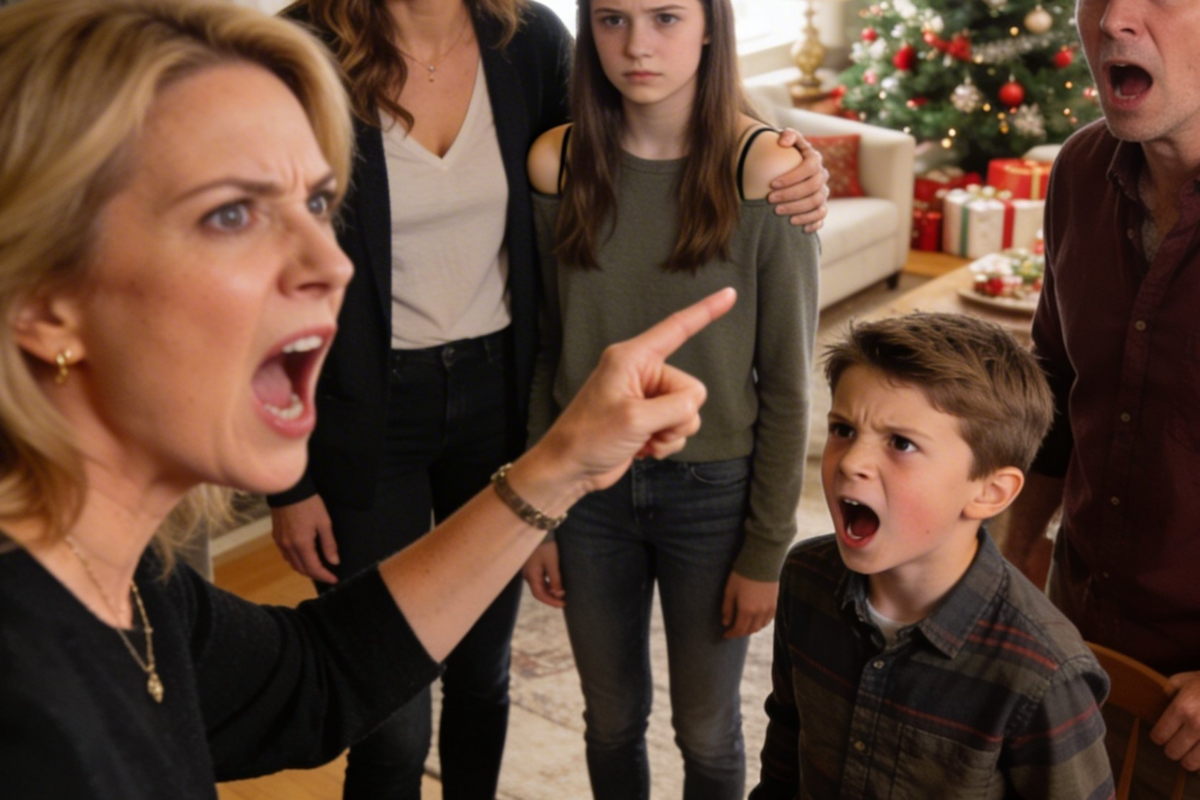
“YOUR HUSBAND’S KID HAS NO RIGHT CALLING US GRANDMA,” My Mom Said To My 14-Year-Old Stepdaughter On Christmas
“YOUR HUSBAND’S KID HAS NO RIGHT CALLING US GRANDMA,” My Mom Said To My 14-Year-Old Stepdaughter On Christmas -In Front Of Everyone. Then My 8-Year-Old Son Stood Up And Said…
At My Graduation, My Father Took Credit For My Degree—Seven Words Sent Security To His Seat
At My Graduation, My Dad Stood Up In The Bleachers And Yelled: “DON’T CLAP-I PAID FOR THAT DEGREE, NOT HER.” 2,000 People Stared. My Hands Shook But I Smiled, Stepped…
During Dinner, Mom Compared Me To My Sister-Again.
During Dinner, Mom Compared Me To My Sister-Again. “She’s The One We’re Proud Of.” I Quietly Helped With Dishes And Said Goodbye. The Next Day, I Got A Message: “Mom’s…

I Woke Up From A Coma To An Empty Room.
I Woke Up From A Coma To An Empty Room. No Dad, No Siblings. Just A Note From My Father “We Stopped Paying. Good Luck.” I Cried For An Hour….

I Went To The Hospital To Take Care Of My Son Who Had A Broken Bone
I Went To The Hospital To Take Care Of My Son Who Had A Broken Bone. While He Was Sleeping, The Head Nurse Quietly Slipped A Piece Of Paper Into…
At 15, My Parents Left Me In A Storm Over My Sister’s Lie—Dad’s Hands Shook When He Saw Who Saved Me
At 15, My Parents Believed My Sister’s Lie And Kicked Me Out In A Storm. “GET OUT. I DON’T NEED A SICK DAUGHTER.” 3 Hours Later -Police Called Them To…
End of content
No more pages to load