The Harrington estate had always looked like a carefully curated dream, the kind of place people admired from a distance, never questioning the silence that lingered behind its perfectly symmetrical walls.
From the outside, everything suggested stability, elegance, and generational wealth, yet beneath that polished surface lived a truth far more unsettling, one that few would have believed without seeing it unfold.
Elena Carter stepped into that world believing she had been chosen, believing that love had elevated her into something rare, something protected, something worthy of admiration.
For a time, she carried that belief like armor, unaware that it was quietly being reshaped into something else entirely, something that would eventually confine her instead of protecting her.
Evan Harrington had been everything she thought she wanted, calm in ways that felt grounding, attentive in ways that felt intentional, and reassuring in ways that made doubt seem unnecessary.
He made her feel seen, but more importantly, he made her feel selected, as if she had passed an invisible test that granted her entry into a life most people only imagined.
But what begins as admiration can slowly evolve into expectation, and what feels like belonging can quietly transform into performance without anyone noticing the moment it shifts.
After the wedding, after the move into the Harrington estate in Greenwich, the atmosphere changed in ways that were too subtle to name, yet too persistent to ignore.
Nothing dramatic happened at first, no obvious conflict, no overt hostility, just a steady undercurrent of correction that began to shape her behavior one comment at a time.
Diane Harrington introduced it with precision, delivering observations wrapped in politeness, framed as guidance, yet carrying a weight that lingered far longer than the words themselves.
Each remark seemed harmless when isolated, but together they created a pattern, one that slowly taught Elena that everything she did was being measured against an invisible standard.
“Sweetheart, you might want to hold your fork differently,” Diane would say, her tone light, her smile intact, leaving no room for direct objection.
“Oh… is that how your family does it?” she would add, not as a question, but as a quiet assertion of difference, of hierarchy, of unspoken judgment.
These were not confrontations, not arguments, but something more insidious, a slow erosion of confidence disguised as refinement.
Richard Harrington, on the other hand, never pretended.
He did not correct her, did not guide her, did not even acknowledge her existence unless it benefited him in some way that justified the effort.
His silence spoke louder than any insult, a deliberate absence that reinforced her position without needing explanation.
And when he did speak, it carried a tone that left no ambiguity, a quiet dismissal rooted in certainty, as if her value had already been calculated and found insufficient.
Evan saw it all unfold.
He noticed the tension, the subtle shifts, the way Elena began to hesitate before speaking, the way she second-guessed herself in spaces that once felt natural.
But noticing is not the same as choosing.
And when the moment came to choose, he never chose her.
Instead, he softened the edges of reality, reframing discomfort as misunderstanding, reframing disrespect as misinterpretation, reframing pain as overreaction.
“You’re overthinking,” he would say, as if clarity itself were the problem.
“They don’t mean it like that,” he insisted, as if intent mattered more than impact.
“Just try harder,” he concluded, placing the burden of resolution entirely on her shoulders without ever questioning the system she was expected to adapt to.
Try harder became the unspoken rule of her existence within that house.
No matter how she adjusted, how she adapted, how she minimized herself to fit their expectations, the standard continued to shift just out of reach.
What began as effort slowly transformed into exhaustion, and what began as confidence gradually dissolved into doubt.
Over time, trying harder no longer felt like growth.
It felt like disappearing.
Elena began to shrink in ways that were difficult to articulate, losing pieces of herself not through dramatic loss, but through quiet surrender.
She spoke less, questioned less, occupied less space, believing that reducing herself might finally bring peace to a situation that never intended to offer it.
And then, one night, the illusion fractured beyond repair.
It did not happen in front of an audience, did not erupt into chaos, did not carry the dramatic intensity people expect from breaking points.
It happened in a moment that was both ordinary and irreversible.
Evan’s hand gripping her arm with a force that crossed a boundary neither of them could pretend did not exist.
The bruises that followed were not just physical evidence.
They were clarity.
And the denial that came afterward only confirmed what Elena had begun to understand long before that moment ever occurred.
Hope did not disappear all at once.
It was replaced.
Replaced by something quieter, something sharper, something far more dangerous to the illusion that had been built around her.
Clarity.
Elena did not react in the way people expect.
She did not scream, did not confront, did not demand immediate resolution.
Instead, she withdrew.
Strategically.
Deliberately.
Quietly.
She began to observe instead of engage, to document instead of argue, to prepare instead of hope.
Every interaction became data.
Every dismissal became evidence.
Every moment of tension became part of a larger narrative she was no longer willing to ignore.
Because leaving was not just an emotional decision.
It was a strategic one.
She understood that in a world built on power and perception, truth alone was not enough.
It had to be undeniable.
When she finally filed for divorce, she expected resistance.
She expected arguments, manipulation, perhaps even escalation.
What she did not expect was indifference wrapped in contempt.
They did not fight her decision.
They dismissed it.
As if her departure were not a loss, but a correction.
Their words carried no weight anymore.
Not because they had changed.
But because she had.
The insults no longer pierced.
They clarified.
They confirmed what she had already accepted.
She had never belonged in that house.
Not because she was unworthy.
But because belonging there required a version of herself she was no longer willing to become.
The arrival of the Rolls-Royce an hour later shifted everything.
Not because of its luxury.
But because of what it represented.
It was not just transportation.
It was presence.
Authority.
Recognition.
The kind of power that does not need to announce itself to be understood.
When the car pulled into the driveway, it disrupted more than the silence.
It disrupted the narrative.
The Harringtons had built their perception of Elena around a single assumption.
That she depended on them.
That assumption had just been challenged.
The man who stepped out of the vehicle was not a driver in the traditional sense.
He carried himself with a precision that suggested purpose, not service.
His presence alone introduced a variable the Harringtons had not accounted for.
And for the first time, uncertainty entered a space that had always relied on control.
The revelation of her grandfather’s estate did not just change the situation.
It redefined it.
This was not about sudden wealth.
It was about exposure.
About the collapse of a narrative that had positioned Elena as lesser, as dependent, as replaceable.
Richard Harrington recognized it immediately.
Not the money.
The implications.
He knew the firm.
He understood the structure behind it, the networks it connected to, the influence it carried.
And for the first time, his certainty wavered.
Because power, real power, is not loud.
It is recognized.
The condition tied to the inheritance was not a coincidence.
It was intentional.
It required her freedom from the Harrington name before access could be granted.
A safeguard.
A boundary.
A decision made long before Elena ever realized she would need it.
Her grandfather had anticipated something she had not yet seen.
And in doing so, he had ensured that when the moment came, she would not just leave.
She would leave protected.
Standing at the threshold of the house that had once defined her limitations, Elena understood something with a clarity that could not be undone.
She had never been powerless.
She had been surrounded by people who needed her to believe she was.
And belief, once broken, does not easily return.
As she stepped into the car, the weight of the past did not follow her.
It remained behind.
Embedded in the walls that had once confined her, now reduced to nothing more than a chapter she had outgrown.
The door closed with a finality that did not require words.
And as the estate disappeared in the rearview mirror, the illusion it represented faded with it.
But endings are rarely as simple as they appear.
Because what Elena left behind was not just a house.
It was a system.
A structure built on control, perception, and unchallenged authority.
And systems do not collapse quietly when they are exposed.
They react.
They resist.
They attempt to reassert themselves in ways that often reveal more than they conceal.
Behind her, the Harrington family was beginning to understand something they had never considered.
Loss.
Not the kind measured in assets or appearances.
But the kind that disrupts identity.
Because Elena had not just left.
She had taken something with her.
The illusion of their superiority.
The assumption of their control.
The certainty of their narrative.
And in its place, she had left uncertainty.
A question they could not easily answer.
What happens when the person you underestimated becomes the one who defines the outcome?
The answer was already unfolding.
Not loudly.
Not dramatically.
But inevitably.
Because power, once revealed, does not disappear.
It transforms.
And Elena Carter was no longer the woman they believed they could control.
She was the woman they failed to understand.
And in that failure, they had created something far more dangerous than defiance.
They had created independence.
The kind that does not ask for permission.
The kind that does not seek validation.
The kind that does not return.
As the car moved forward, carrying her into a future no longer defined by their expectations, one truth settled into place with undeniable certainty.
This was not the end of her story.
It was the beginning of one they would never be able to rewrite.
And somewhere behind her, within the walls of a house that had never truly been perfect, a realization was taking hold.
They had not just lost control.
They had lost her.
And that loss would echo far longer than they were prepared to admit.
News
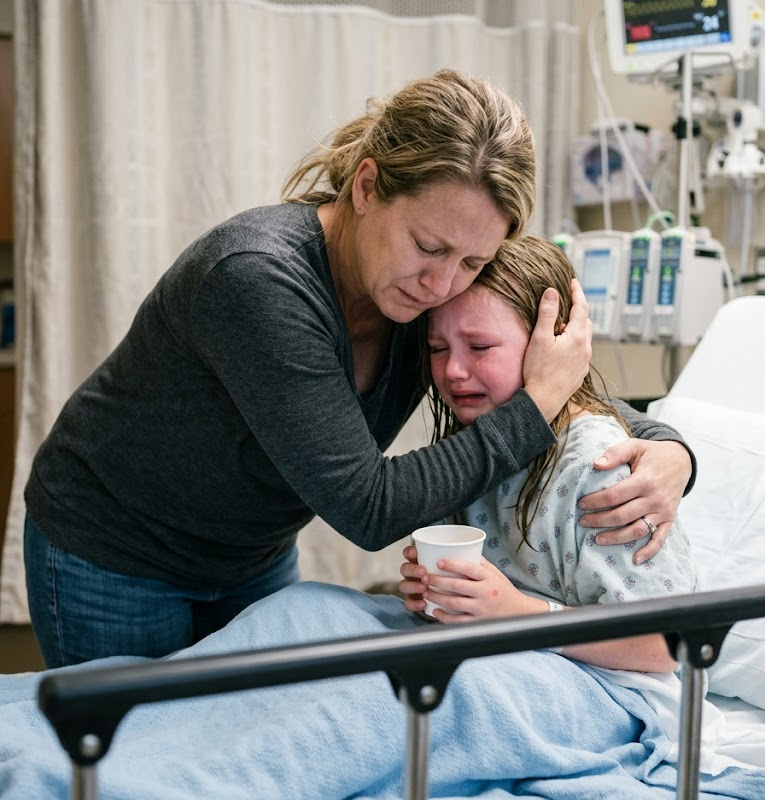
NC-MY SIX-YEAR-OLD DAUGHTER WAS SUPPOSED TO BE SPENDING A FUN DAY WITH MY PARENTS AND MY SISTER UNTIL MY PHONE LIT UP IN THE MIDDLE OF A WORK MEETING AND A POLICE OFFICER SAID SHE’D BEEN RUSHED TO THE HOSPITAL AFTER BEING FOUND LOCKED ALONE IN MY CAR DURING A BRUTAL HEATWAVE—AND WHEN I CALLED MY SISTER IN PANIC, SHE DIDN’T CRY, APOLOGIZE, OR EVEN ASK IF LUCY WAS BREATHING… SHE LAUGHED, TOLD ME THEY’D “HAD SUCH A GREAT TIME WITHOUT HER,” AND IN THAT INSTANT I STOPPED BEING THE DAUGHTER WHO FIXED EVERYTHING, OPENED MY BANKING APP, CALLED A LAWYER, AND SET IN MOTION THE FIRST THREE HOURS OF THE FAMILY COLLAPSE THEY NEVER THOUGHT I’D DARE TO START…
My phone rang at 2:17 p.m., the kind of weekday hour when nothing dramatic is supposed to happen. I was sitting at my desk, pretending to be interested in a…
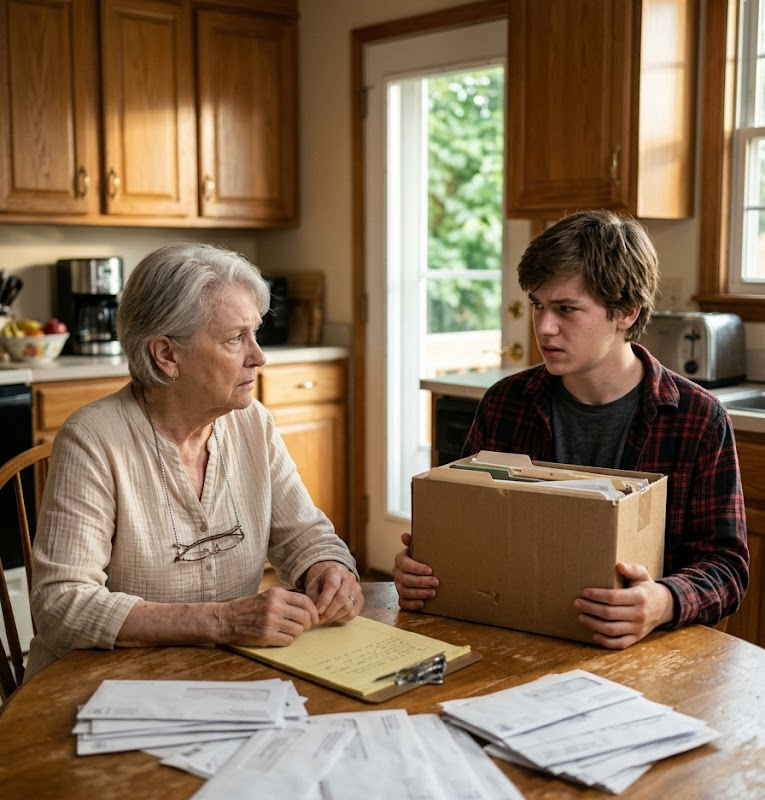
TAS-I CHECKED THE COLLEGE FUND MY GRANDMOTHER HAD BUILT FOR ME SINCE BIRTH AND FOUND JUST $214 LEFT, EVEN THOUGH HER LAST LETTER SAID THERE SHOULD HAVE BEEN OVER $184,000—AND WHEN I TOLD HER, SHE DIDN’T CRY, YELL, OR EVEN ASK MY PARENTS FOR AN EXPLANATION… SHE JUST WENT QUIET FOR A LONG MOMENT, ASKED WHAT CHANNEL MY MOTHER WATCHED AT SIX, AND TOLD ME TO BRING EVERY ENVELOPE SHE’D MAILED ME FOR EIGHTEEN YEARS TO HER KITCHEN TABLE BY SEVEN THE NEXT MORNING—BECAUSE BY NOON A LAWYER WAS FILING PAPERS, BY EVENING CHANNEL 7 WAS AIRING THE STORY, AND BEFORE THE SEGMENT EVEN FINISHED, MY FATHER WAS ALREADY CALLING TO BEG ME TO STOP WHAT MY GRANDMOTHER HAD STARTED…
I told her. Channel 7. My mother had watched Channel 7 every evening at six for as long as I could remember, positioned in her armchair with her wine glass…

They Mocked Me at the Class Reunion and Until a Helicopter Landed and Someone Said, “Madam General, We Need You.”
The Arrival My name is Rebecca Cole, and I walked into our twenty-year high school reunion wearing a simple navy dress from a department store clearance rack. Within five minutes…

THE BILLIONAIRE SAID HIS 7-YEAR-OLD SON WAS “BORN DEAF” AND TOLD THE NEW HOUSEKEEPER TO IGNORE THE BOY’S STRANGE LITTLE HOWL EVERY TIME THE IRON GATE GROANED, THE KETTLE SCREAMED, OR A DEAD BRANCH SCRATCHED THE WINDOW—BUT ONE FOGGY MORNING, WHEN SHE FOLLOWED HIM INTO THE FORBIDDEN WEST WING, UNLOCKED A ROOM HIS DEAD MOTHER’S THINGS HAD BEEN LEFT TO ROT INSIDE, AND OPENED A MEDICAL FILE FROM ZURICH HIDDEN BESIDE AN OLD BABY MONITOR, SHE DISCOVERED THE CHILD HAD NEVER BEEN BROKEN AT ALL… AND HIS FATHER HAD BEEN HIDING THE TRUTH FOR YEARS
The silver dessert spoon didn’t hit the Carrara marble floor with a clatter; it landed with a dull, heavy thud that seemed to vibrate through the soles of Elena’s shoes….
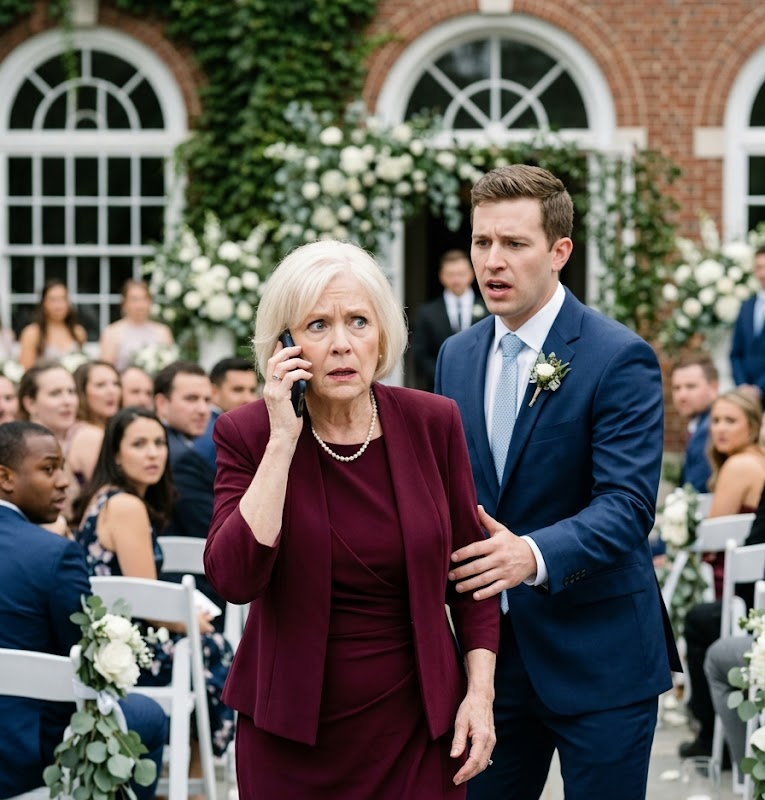
I ARRIVED AT MY GRANDDAUGHTER’S WEDDING IN THE PINK SILK DRESS I’D SAVED FOR YEARS, ONLY FOR MY OWN SON TO STOP ME AT THE GATE, GLANCE AT THE GUEST LIST, AND SAY, “MOM, YOU’RE NOT ON IT” WHILE TWO HUNDRED PEOPLE STARED LIKE I WAS A STRANGER TO THE FAMILY I PAID FOR—SO I SMILED, SAID, “IT’S FINE, SON,” WENT HOME, OPENED THE CREAM FOLDER WITH EVERY CONTRACT IN MY NAME, AND BY THE TIME HE RETURNED FROM HIS HONEYMOON, THE LETTER WAITING AT HIS DOOR MADE HIM REALIZE THE WOMAN HE DISGRACED STILL OWNED FAR MORE THAN HE EVER UNDERSTOOD
The Beginning of Change Denise Parker, 72 years old, had waited for this moment her whole life. She had saved, planned, and hoped for the day when her oldest granddaughter,…

I PAID $11,400 A MONTH WHILE MY PARENTS AND BROTHER LIVED RENT-FREE IN MY APARTMENT, COOKED THEIR MEALS, CLEANED THEIR MESS, AND EVEN GAVE UP MY HOME OFFICE SO MY BROTHER COULD TURN IT INTO HIS GAMING DEN—THEN THE NIGHT I FINALLY ASKED FOR A LITTLE SPACE, MY MOM LOOKED ME DEAD IN THE EYES AND SAID, “IF YOU DON’T LIKE LIVING WITH FAMILY, YOU CAN LEAVE”… SO I SLEPT IN MY CAR, WAITED FOR DAWN, MADE ONE QUIET TRANSFER, AND 48 HOURS LATER THEY OPENED THE DOOR EXPECTING ANOTHER DAY OF FREE LIVING—ONLY TO FIND THE PEOPLE STANDING THERE WHO CHANGED EVERYTHING
“If you don’t like living with family, you can leave.” My mom said it the way people say “bless your heart” when they mean the exact opposite. Arms crossed. Chin…
End of content
No more pages to load